When a foreign national is detained in China, contacting a criminal defense lawyer is only the first step. The next challenge is often completing the lawyer's appointment formalities. For Chinese nationals, this process can be relatively straightforward. For foreign nationals, however, additional issues may arise because the person appointing the lawyer may be overseas and the relevant identification or relationship documents may have been issued in another country.
This article explains the documents commonly required and answers four important questions: what documents are required; whether foreign-language documents need Chinese translations; whether documents need notarization or an Apostille; and whether the same procedure applies at every detention center in China.
1. What Documents Are Usually Required?
The specific requirements depend on the circumstances of the case and the detention center, but the following documents are commonly required.
Identification of the Person Appointing the Lawyer
The person appointing the lawyer should generally provide a copy of their passport or other valid government-issued identification document. For example, if the suspect's spouse is appointing the lawyer, the spouse's passport may be required.
Identification of the Detained Suspect
A copy of the suspect's passport or other identification document should generally be provided if available. This allows the lawyer and relevant authorities to verify the identity of the detained person. If the family does not have a copy of the suspect's passport, the lawyer can advise on how to proceed based on the specific circumstances.
Proof of Family Relationship
If a close relative is appointing the lawyer, documentation establishing the relationship may be required. The exact document required depends on the country where the relevant document was issued.
Power of Attorney
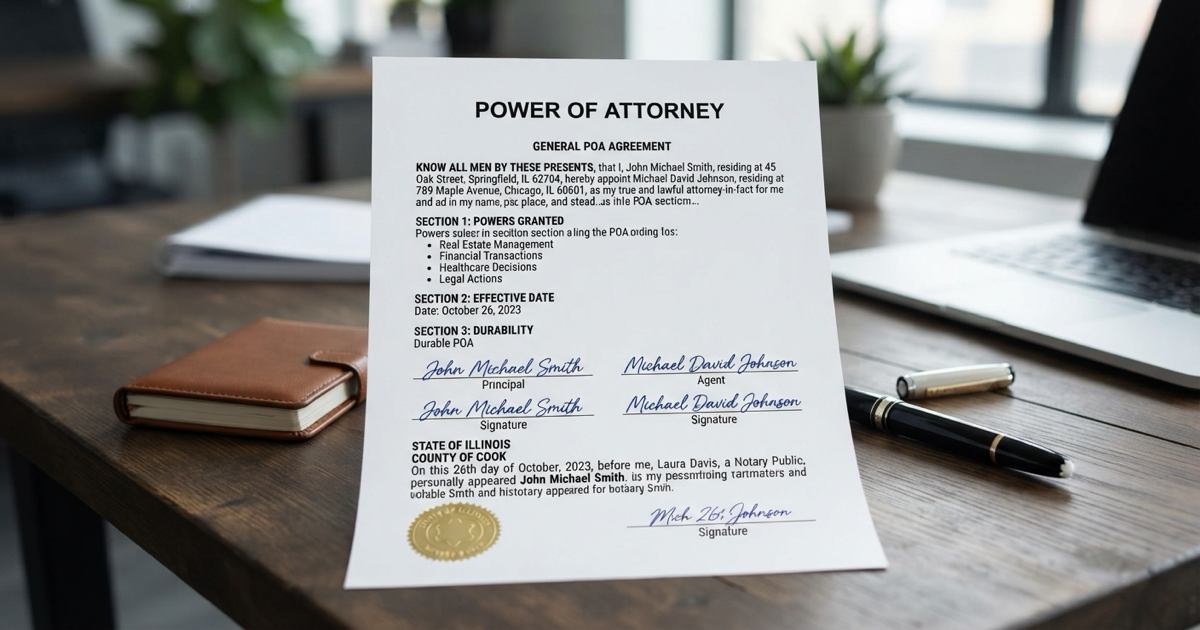
The person appointing the lawyer will normally need to sign a Power of Attorney (POA). The POA authorizes the lawyer to act as defense counsel for the suspect. The lawyer should normally provide the appropriate POA form and instructions for signing it.
Foreign families should not assume that a generic power of attorney used in their home country will automatically be accepted in China. The format and execution procedure should be confirmed with the Chinese defense lawyer in advance.
2. Do Foreign Documents Need to Be Translated into Chinese?
In practice, foreign-language documents generally need Chinese translations. If a passport, marriage certificate, birth certificate, or other supporting document is not in Chinese, a Chinese translation may be required for submission to the relevant authorities. For example, if a Brazilian family member provides a Portuguese marriage certificate, the document may need to be accompanied by a Chinese translation.
As a practical matter, we recommend using a qualified translation company in China and having the translation bear the company's official seal.
Important: Translation is separate from notarization, Apostille, and legalization. A Chinese translation does not replace any authentication formalities that may otherwise be required.
3. Do the Documents Need to Be Notarized?
Sometimes. This depends on the document, how it was executed, where it was issued, and the requirements of the relevant authorities. For example, a Power of Attorney signed overseas or a foreign document proving a family relationship may be subject to additional formalities before it can be accepted in China. The relevant procedure may involve: notarization → authentication/Apostille → submission in China.
However, the practical requirements should be confirmed before the family spends time and money obtaining notarization or authentication.
4. What Is an Apostille?
An Apostille is a form of authentication used between countries participating in the Hague Apostille Convention. China became a party to the Hague Apostille Convention on November 7, 2023. Where both the country issuing the document and China are parties to the Convention, an Apostille can generally replace the traditional consular legalization process. For example, depending on the applicable requirements, the process may be: foreign document → notarization (if required) → Apostille → use in China.
For countries where the Apostille Convention does not apply, the traditional legalization process may still be required, potentially involving notarization → authentication by the competent authority → Chinese embassy or consulate legalization. However, this is not necessarily the procedure that will be required in every criminal case.
5. Does Every Chinese Detention Center Have the Same Requirements?
No. This is one of the most important practical points for foreign families. Although Chinese law provides a general framework concerning foreign documents, the practical document requirements can differ between detention centers. For example, based on our experience with detention centers in Guangzhou:
- Yuexiu Detention Center may require additional formalities concerning proof of family relationship. In certain circumstances, a relationship certificate or declaration issued by the relevant foreign embassy or consulate in China may be accepted.
- Panyu Detention Center may apply relatively simpler procedures in certain cases and may not require notarization or authentication in the same manner.
- Other detention centers may adopt different requirements.
These are practical examples rather than nationwide rules, and the requirements may change. Therefore, always confirm the specific requirements with the relevant detention center and your Chinese defense lawyer before preparing the documents.
6. Why Should You Confirm the Requirements First?
Imagine that a suspect is detained in Guangzhou and his sister lives in Canada. The family may assume that they need to obtain a notarized relationship document, obtain an Apostille, send the documents to China, obtain a Chinese translation, and submit everything to the detention center. But if the particular detention center accepts another form of proof of relationship, the family may have spent unnecessary time and money completing formalities that were not actually required.
The opposite situation can be even more problematic. If the detention center requires additional formalities and the family sends incomplete documents, the appointment process may be delayed. For a detained suspect, unnecessary delay can be extremely important.
7. A Practical Document Checklist
Before appointing a Chinese criminal defense lawyer, a foreign family should generally prepare:
- From the person appointing the lawyer: passport or other identification.
- From the detained suspect: passport or other identification, if available.
- Proof of relationship: marriage certificate / birth certificate / other official relationship document.
- Lawyer appointment: Power of Attorney signed by the person legally authorized to appoint counsel.
- For foreign-language documents: Chinese translation and the translation company's official seal.
- Where required: notarization; Apostille; foreign ministry/competent authority authentication; Chinese embassy/consulate legalization; relationship certificate or declaration issued by the relevant embassy/consulate.
Not every case requires all of the above. The applicable requirements should be confirmed based on the particular detention center and case.
8. What If the Family Is Outside China?
This is very common in cases involving foreign nationals. The family does not necessarily need to travel to China simply to start the process of appointing a lawyer. Depending on the circumstances, the lawyer can communicate with the family remotely and advise them on: what documents are required; who can legally appoint the lawyer; whether the documents need notarization; whether an Apostille is required; whether consular legalization is required; how the documents should be translated; and how the documents should be delivered to China.
This is why it is advisable to contact the Chinese defense lawyer before arranging notarization or Apostille overseas.
9. Key Takeaways
If a foreign national has been detained in China:
- Prepare the basic identification documents. The appointing person's passport and the suspect's passport are normally important.
- Prepare proof of the family relationship. A spouse, parent, child, or sibling may need to prove the relationship.
- Prepare the Power of Attorney. Use the form and signing procedure recommended by the Chinese defense lawyer.
- Translate foreign-language documents into Chinese. A qualified Chinese translation company should generally be used, with its official seal.
- Do not automatically assume that Apostille is required. The practical requirements vary.
- Confirm the requirements with the relevant detention center before completing overseas formalities.
- Contact a lawyer as early as possible. Do not wait until every document has been prepared before seeking legal assistance.
Conclusion
For a foreign national detained in China, the appointment of a criminal defense lawyer may involve more than simply signing a Power of Attorney. Foreign families may need to deal with proof of relationship, Chinese translations, notarization, Apostille, consular legalization, and detention-center-specific requirements.
The most important practical advice is simple: contact a Chinese criminal defense lawyer first and confirm the required documents before beginning notarization or Apostille procedures overseas. The correct procedure can save valuable time and help the lawyer begin providing legal assistance to the detained foreign national as soon as possible.
Related: Who Can Appoint a Lawyer → | Power of Attorney → | Hiring a Lawyer from Overseas →
Disclaimer: This article provides general information about Chinese criminal procedure and document requirements. Actual requirements may vary depending on the case, the relevant authorities, and the detention center. This article does not constitute legal advice.